By Will Wiggins
MSNHA’s RiverLine consultant
Land steward at Cane Creek Canyon Nature Preserve, with Land Trust of North Alabama
For most of my life I was afraid of snakes.
I cannot point to a single moment or experience that caused that fear. It was simply there, ingrained somewhere between childhood warnings and cultural myths, reinforced by the idea that snakes were dangerous and unpredictable and best avoided at all costs. As many people do, I treated them as something to fear first and understand later — if at all.
That perspective began to change as I spent more time outdoors.
As my interest in hiking and paddling and exploring wild places grew, so did my curiosity about the living things that inhabit them. I found myself wanting to know more about the plants, insects, birds and animals I encountered regularly. And that slowly came to include snakes — once a source of anxiety.
That curiosity led me to online snake identification and educational groups. I began to learn from herpetologists, field biologists and experienced outdoorspeople. I saw photo after photo of snakes calmly moving through leaf litter, basking on rocks or retreating quietly when encountered by humans. I learned how to identify species by head shape, pattern, coloration and behavior. Over time, knowledge began to replace fear.
One of the most important lessons I learned is that snakes, even venomous ones, are not out to get us. They do not hunt people. They do not lie in wait to attack hikers. Nearly every defensive bite occurs when a snake is stepped on, handled, cornered or otherwise forced into a situation where it feels it has no escape. In other words, most negative encounters are preventable.
Learning how to identify snakes played a major role in changing how I move through the outdoors. When you can distinguish a harmless water snake from a venomous cottonmouth or recognize the warning signs of a rattlesnake before getting too close, you gain confidence. You slow down. You become more observant. Fear gives way to awareness.
That awareness naturally leads to caution.
Caution means watching where you step, especially in warm months. It means not placing your hands where you cannot see. It means giving snakes space when you encounter them and allowing them a clear path to retreat. Caution respects the fact that snakes play an important role in the ecosystem while acknowledging that some species can cause serious harm if mishandled.
Fear, on the other hand, often leads to poor decisions. Fear causes people to panic, to strike or to kill snakes unnecessarily. Fear turns a brief and harmless encounter into a dangerous one. In my experience, fear is far more likely to result in injury than calm informed behavior.
Working outdoors has only reinforced this lesson. I encounter snakes regularly, including venomous species, and those encounters are almost always uneventful. The snake notices me or I notice it and one of us calmly moves away. Respect and distance are usually all that is required.
Snakes are an ancient and essential part of our landscapes. They control rodent populations and contribute to balanced ecosystems and are indicators of healthy wild places. Learning to coexist with them does not require bravery or recklessness. It requires knowledge, patience and a willingness to replace fear with understanding.
If you spend time outdoors you will eventually encounter snakes. When that happens, remember that caution keeps you safe, but fear rarely does.
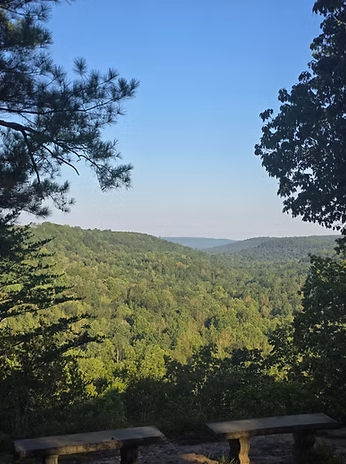
These ideas were reinforced for me during a recent encounter while working as a land steward at Cane Creek Canyon Nature Preserve. I observed a timber rattlesnake and, later, her newly born brood near one of the preserve’s overlooks. Witnessing that moment up close was a powerful reminder of how calm and deliberate these animals are when left undisturbed. I’ll share that story in my post and take a deeper look at the encounter and the sense of respect it left with me.