By Kurt Vetters
University of North Alabama
As we celebrate the United State’s 250th birthday this year, we have an opportunity to ponder how the American Revolution impacted our home here in northwest Alabama. Most people would be surprised that the salient event for us occurred on a remote mountaintop in South Carolina in 1780 — its repercussions may echo with us today.
By 1780 the colonies had been fighting Great Britain for five long years, and things were looking grim. The British still held the city of New York in the north, and by May Charleston had fallen to the Redcoats. American defeats at Savannah and throughout South Carolina that summer appeared to doom the nascent revolution as British armies poised to strike virtually unopposed into North Carolina and Virginia.
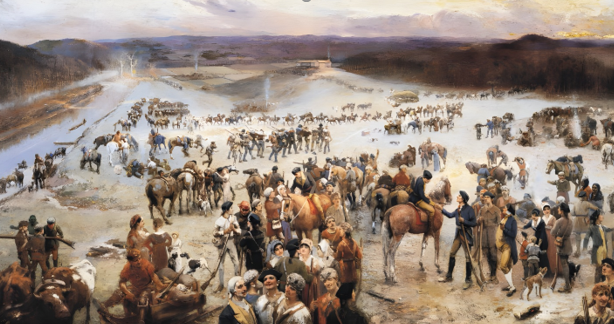
The western flank of this onslaught was commanded by British Major Patrick Ferguson, leading an all-American force of over one thousand Loyalist militia that included 140 of his well-trained and red-coated American Regiment from New York and New Jersey. No organized force opposed him, but rumors that an increased militia of back-country men from what would later become Tennessee and Kentucky began trickling out of the Appalachians. Ferguson made the bold threat that he would “march over the mountains, hang their leaders, and lay waste their country with fire and sword.” His scare tactics backfired, and by late September the men from those areas began to assemble under their informal captains, such as Isaac Shelby, William Campbell and John Sevier. Over a thousand eager volunteers met at Sycamore Shoals ready to confront Ferguson.
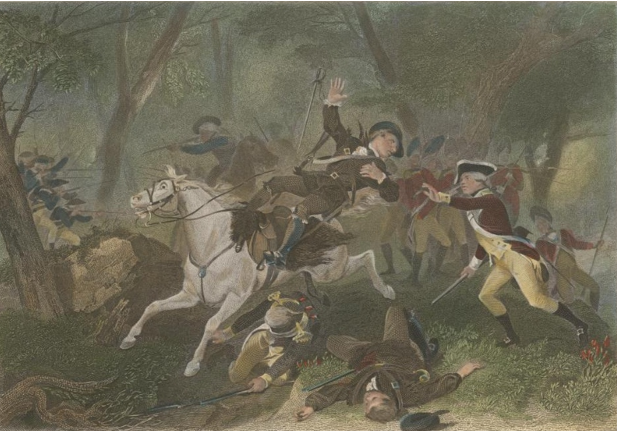
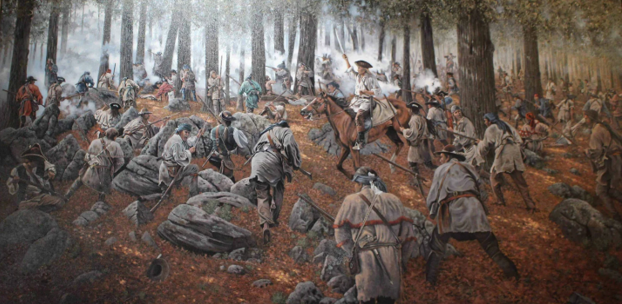
This Patriot force materializing out of nowhere shocked Ferguson. As he pulled back closer to the regular British forces, he was overtaken and surrounded at his camp on King’s Mountain by nine hundred hard-riding mountain men. In a ferocious battle lasting one hour, Ferguson was killed and his entire command destroyed. This effectively eliminated the British threat in the South, starting a disastrous cascade of events for the Redcoats that eventually led to the British surrender at Yorktown one year later and the end of the American Revolution.
Who were these Over-Mountain men that, in what Thomas Jefferson said, was the “turn of the tide of success which terminated the Revolutionary War?” Why do they matter to us today?
Overwhelmingly the settlers who populated the rough edge of the country in 1780 were Scotch-Irish frontiersmen. They had fought Native Americans for decades and were battle-hardened and self-reliant. They were descended from Celtic peoples in Scotland, Wales and Ireland who continued to harbor great dislike for the English. Ferguson’s threat galvanized their resolve and provided the motivation & rallying cry for them based on centuries of traditional opposition to British rule.
After the Battle of King’s Mountain, the young soldiers returned to their homes with the knowledge that they had changed the course of history. They became the sharp spear of the spirit of Manifest Destiny that swept the United States toward westward expansion. Land grants in Tennessee to Revolutionary War veterans provided proven combat leadership in the west, and the confidence of victory helped shape their spirit of independence and self-sufficiency.
Veteran leaders such as John Sevier went on to leadership positions in Tennessee, and their children and grandchildren took that spirit into the newly opened frontier of Alabama a generation later. Many veterans of King’s Mountain relocated to the Alabama territory with their kin as these families immigrated south and west, and the stories of their grandfathers echoed through their lives.
This spirit was well represented by the Courtland Red Rovers who volunteered in 1835 to fight for the independence of the fledgling Texas Republic. It passed to southerners in north Alabama who fought in units for the North and the South during the American Civil War. It manifests today in many ways: a spirit of self-sufficiency, church-centric culture, strong support of gun-ownership, distrust of people and ideas from outside their home and conservative, limited government.
Many of the innate thoughts and beliefs we hold today in this region date back centuries to the English/Celtic conflicts that manifested in America on a small mountain in South Carolina in 1780 and changed the future of our country. We may not hear those stories every day now, but they remain part of the fabric of who we are.
For further reading:
Courtland’s Red Rovers: https://www.tshaonline.org/handbook/entries/red-rovers
The Southern Campaign: https://www.battlefields.org/learn/maps/southern-campaign-1776-1781
King’s Mountain: https://www.battlefields.org/learn/maps/kings-mountain-oct-7-1780