By Clayton Davis
MSNHA Historic Resources Manager
Pres. Lyndon B. Johnson signed the National Historic Preservation Act into law on Oct. 15, 1966. The NHPA’s passage came after years of dedicated professional advocacy, community support and Federal self-examination of existing historic preservation practices. It was spurred on by a wave of post-WWII urban renewal projects that destroyed or otherwise impacted historic sites. Federal preservation protections at the time were found to be inadequate and unable to effectively stop this wave of losses. Demolition of local landmarks began to first inspire municipal and state laws that sought to more closely protect cultural resources.
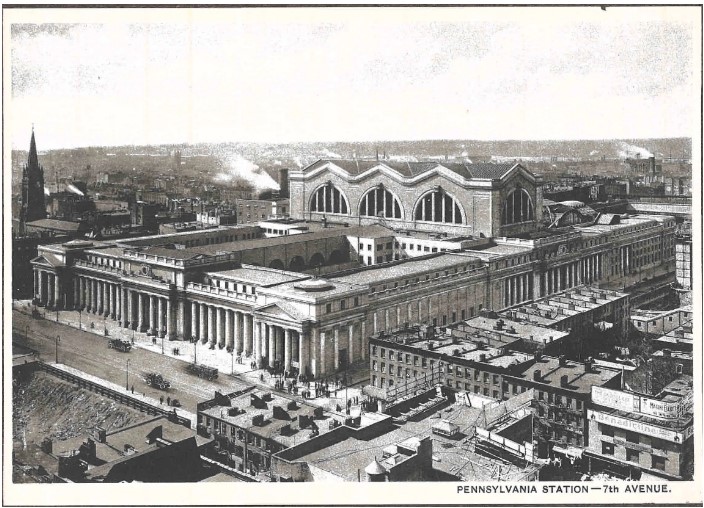
The 1963-66 demolition of New York City’s Pennsylvania Station to make way for the new Madison Square Garden was a breakpoint for many activists and locals. Penn Station, completed in 1910, had become a source of civic pride—a major transportation hub and symbolic gateway to the city. New Yorkers were dismayed to see it come down in pieces. Perhaps many had realized and understood now the fragility of historic and cultural sites, that even the most defining landmarks were not safe. Inefficiencies with the existing NYC Landmarks Preservation Commission, the impending demolition of yet another property (Manhattan’s 1890 Brokaw Mansion) and resulting public backlash eventually led the city to pass the 1965 Landmark Law.
The LPC’s authority and enforcement powers increased considerably under the Landmark Law. It gave the commissioners and agency staff the ability to review alterations to designated city historic, architectural and cultural landmarks. In the same year, the U.S. Conference of Mayors’ Special Committee on Historic Preservation authored the influential report “With Heritage So Rich.” The report called for immediate action to protect the nation’s remaining historic sites from unchecked development. It gave Congress a strong push to propose and pass the NHPA.
The NHPA’s passing established the national historic preservation framework we still refer to. It formalized a process for Federal agencies to consider the impacts of their actions on historic properties in Section 106, created the National Register of Historic Places, set up the structure for State Historic Preservation Offices and authorized the Advisory Council on Historic Preservation to oversee the preservation process. It remains the most significant law of its kind in U.S. history. Each component provided a means for the federal government to understand the political, economic and social repercussions of losing historic and cultural resources. Conversely, Section 106 gives states and the public a degree of oversight over federal actions that had rarely existed before.
For all of its successes and precedents, NHPA was not perfect in its original state. It excluded Tribal nations from the mandatory review process — agencies were not required to consult with them even if a project took place on Tribal land or affected Indigenous cultural sites. A 1992 amendment added Tribal consulting rights and created Tribal Historic Preservation Offices with authority over cultural resources within designated Tribal land. As with many regulatory frameworks, the Section 106 process has had to grow and change since its inception to suit the needs of both the public and emerging cultural resources.
Today on the 60th anniversary of the NHPA’s signing, we look back from where we have come and consider where we are going. The Section 106 process grew out of the understanding that historic structures, cultural sites, Indigenous sacred sites and archaeological remains are more than their materials and land. They cradle memories, remind us of both tragedy and belonging, hold lessons for the present and make us feel something simply by existing alongside them. Every site of shared heritage represents a shared story. Once these buildings, sites and landscapes are gone they cannot be recovered. Tangible cultural remains are non-renewable.
###